
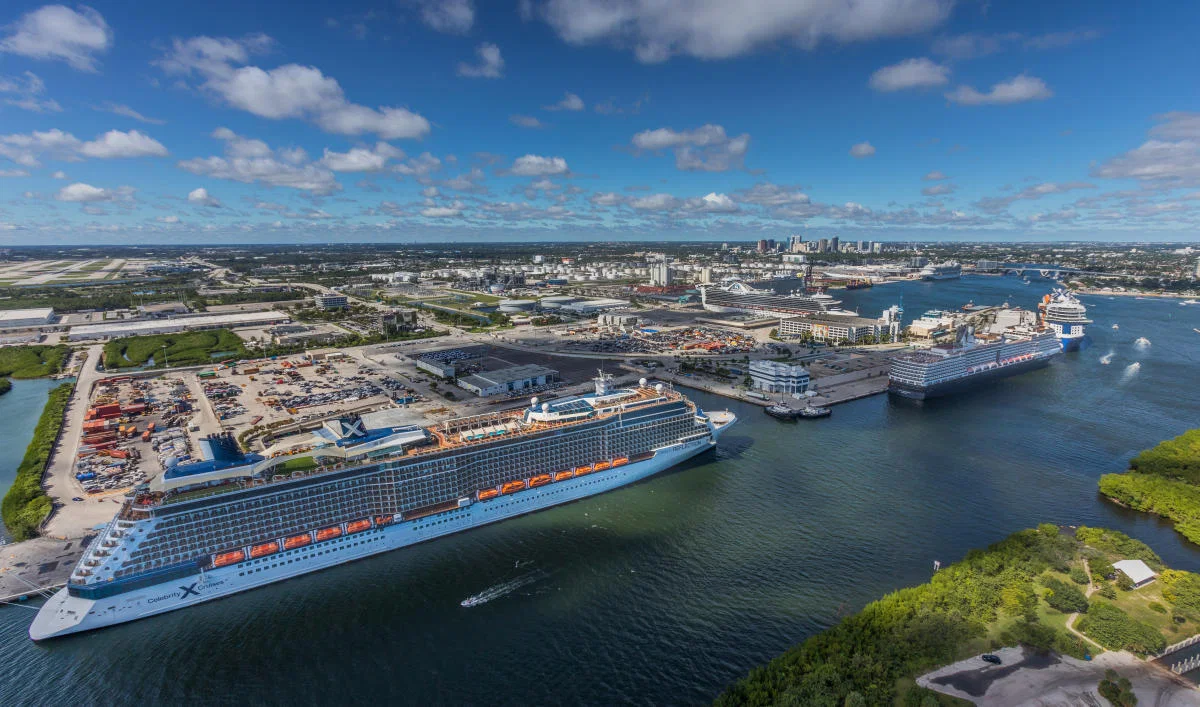
Port Everglades is one of the busiest cruise ports in the world and a working cargo port at the same time, sitting directly across the waterway from the Greater Fort Lauderdale/Broward County Convention Center and a short drive from Fort Lauderdale-Hollywood International Airport. Its dual role as a passenger and freight port means the surrounding road network, especially 17th Street, carries both cruise-ship turnaround traffic and container and fuel truck traffic on a schedule set by shipping lines and cruise operators.
For anyone routing freight through this part of the market, Port Everglades is less a venue to book and more a fixed piece of infrastructure whose schedule has to be worked around. A truck timed to reach the convention center dock during a cruise turnaround, when thousands of passengers and their luggage are moving through the same corridor, is going to run late no matter how well the rest of the schedule was planned.
Fuel and bunkering activity at the port adds another layer of heavy-vehicle traffic on top of cruise and container movement, which is a further reason a delivery schedule routed anywhere near the port's gates should build in buffer rather than assume a single predictable traffic pattern.
Execution priorities
- Check cruise turnaround schedules before timing a freight delivery that has to pass near the port on 17th Street.
- Treat Port Everglades as working infrastructure, not an event venue, when scoping any show logistics.
- Coordinate security and access separately for anything requiring entry to the port's controlled areas.
A dual-purpose port next to the show floor
Port Everglades operates as both a cruise homeport, with multiple large ships turning over passengers on the same days each week, and a cargo terminal handling containers and fuel shipments for the region. That dual function means its traffic footprint on the surrounding roads is heavier and more variable than a typical single-purpose commercial port.
The port's proximity to the convention center campus, essentially across the waterway, means the two facilities share road infrastructure even though they operate completely independently of each other.
Cruise turnaround days and 17th Street
Cruise ships typically turn around on fixed days of the week, disembarking one set of passengers and boarding the next within a matter of hours, which floods 17th Street and the port's access roads with passenger vehicles, taxis, and luggage transport during those windows. A freight delivery scheduled during a turnaround window is competing with that traffic for the same limited road capacity.
Checking which days carry the heaviest cruise turnaround traffic, and avoiding scheduling tight freight windows during those hours, is a straightforward way to protect a delivery schedule that has to use 17th Street.
- Identify cruise turnaround days before scheduling tight freight windows near the port
- Build extra buffer into any 17th Street route during peak passenger movement hours
- Coordinate cargo-related access separately from passenger-related traffic patterns
Security and controlled access
Port Everglades is a secured facility, and any need for a vehicle or crew member to actually enter the port's controlled areas, as opposed to simply passing nearby on public roads, involves credentialing and access rules set by the port authority, not by a show's general contractor. That process needs its own lead time separate from standard freight or labor booking.
Most trade show freight never needs to enter the port itself; the relevant planning concern is almost always the surrounding road traffic rather than the port's internal operations.
What this page does not claim
This page describes Port Everglades as working infrastructure that affects nearby freight routing and does not claim any operational role at the port itself, credentialed access, or a crew stationed there. Any actual port access needs to be arranged through the port authority directly.
Frequently asked questions
Does a trade show ever actually take place at Port Everglades?
No. Port Everglades is a working cruise and cargo port, not an event venue. It matters here because its traffic affects roads near the convention center, especially 17th Street.
How does cruise ship traffic affect a convention center delivery?
Cruise turnaround days flood 17th Street and nearby access roads with passenger traffic for several hours, which can delay a freight delivery scheduled through the same corridor during that window.
Does freight ever need to physically enter the port?
Rarely for a trade show. Most freight concerns are about the surrounding road traffic, not entry into the port's own secured and credentialed areas.
Does this page claim any operational access to the port?
No. It is planning context about how the port's schedule affects nearby traffic, not a claim of credentialed access or a stationed crew.