
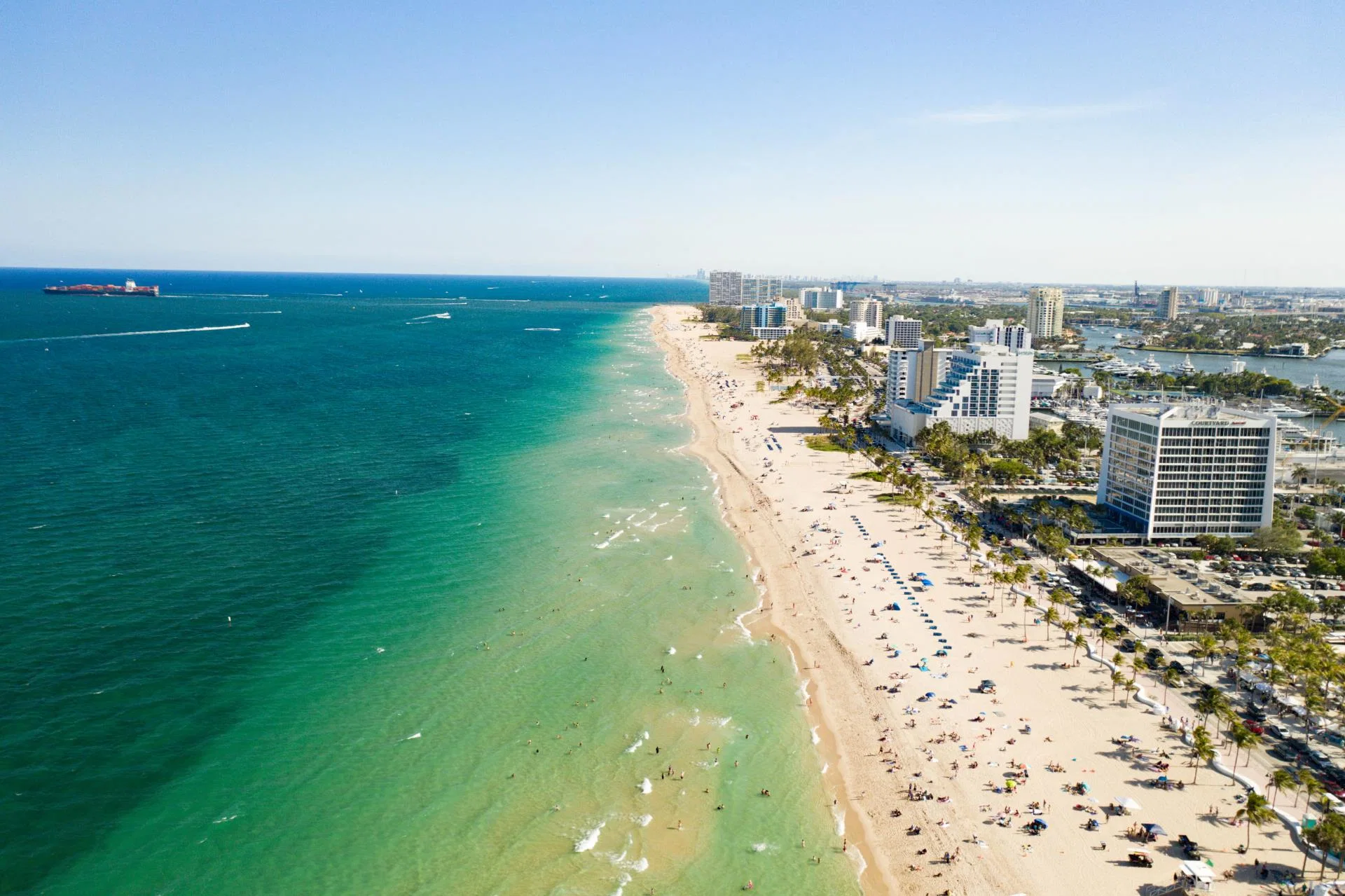
Fort Lauderdale Beach is the oceanfront stretch along A1A, often called the Strip, lined with hotel towers, restaurants, and public beach access from the inlet down toward the central beach district. It built its identity on tourism, and much of the private event and meeting business here runs through hotel ballrooms, rooftop spaces, and pool decks rather than a dedicated convention hall.
That hospitality-first character shapes what works on the beach: a brand activation, a sponsor reception, or a smaller meeting fits naturally into a beachfront hotel's own event program, while a large exhibitor floor with heavy freight is better suited to the convention center a short drive south along the same barrier island.
Rideshare pickup along A1A is also more constrained than it looks on a map, since the beachfront's traffic lanes and valet zones leave limited curb space for a driver to actually stop, which matters for an event expecting a large wave of guests departing at once.
A destination event drawing out-of-town guests should also factor beach hotel rates into the budget early, since the Strip's per-night pricing during peak winter season runs well above what the same room type costs in the summer shoulder months.
Execution priorities
- Match the event format to what beach hotels actually run: receptions, meetings, and pool-deck activations rather than large exhibit floors.
- Plan around A1A's tourist traffic patterns, which peak differently than downtown's weekday business traffic.
- Confirm outdoor and beach-adjacent event permitting with the city and the property, since public beach access adds a layer hotels inland do not have.
A hospitality strip, not a show floor
The hotels along Fort Lauderdale Beach compete on ocean views, pool decks, and proximity to the sand, and their event spaces are built for weddings, receptions, and meetings that make use of that setting rather than for freight-heavy exhibitor floors. A sponsor dinner or a press event with an ocean backdrop plays to the beach's actual strength.
The beach's tourism economy also means hotel event calendars compete with leisure guests for the same rooms and public spaces, particularly during peak winter season when occupancy runs high across the Strip.
A1A traffic and tourist-season timing
A1A carries a steady flow of tourist and beachgoer traffic that behaves differently than downtown's weekday commuter pattern, with weekends and winter-season afternoons running heaviest. An event with a fixed start time needs buffer built in for guests navigating that traffic and for parking, which is limited and often valet-only along the beachfront hotel strip.
Peak tourist season overlaps with the region's best trade show weather, October through April, so beach-adjacent events during that window are competing with vacationers for the same hotel capacity and the same parking.
Working with public beach access
Any activation that spills onto the actual sand or the public boardwalk along A1A involves the city's beach and right-of-way permitting process, separate from whatever permission a hotel gives for its own private property. That distinction matters for anything larger than a small branded setup confined to a hotel's own pool deck or terrace.
Weather is also a real factor for anything staged outdoors here, since wind off the ocean and the same hurricane-season and summer-storm patterns that affect the rest of the market apply directly to beachfront programming.
- Confirm whether the footprint stays on private hotel property or extends onto public beach or right-of-way
- Build weather and wind contingencies into any outdoor beachfront plan
- Account for valet and limited parking availability along A1A
What this page does not claim
This page describes Fort Lauderdale Beach as a hospitality-driven district for planning purposes and does not claim a fixed office, hotel partnership, or crew stationed here. Any specific venue's event rules and permitting requirements need to be confirmed directly with the property and the city.
Frequently asked questions
Can a large exhibitor floor be run on Fort Lauderdale Beach?
Not typically. Beach hotels are built for receptions, meetings, and pool-deck events rather than large freight-heavy exhibit floors, which are better suited to the convention center.
Does an event on the sand need a separate permit from the hotel's own approval?
Yes. Anything extending onto public beach or right-of-way involves the city's own permitting process, separate from a hotel's private-property approval.
Why does tourist season matter for booking a beach venue?
Because peak winter tourist season overlaps with the region's best trade show weather, which means beach hotel event space and parking compete with vacationer demand during the same months.
Does this page claim a hotel partnership on the beach?
No. It is planning guidance about the district's hospitality character, not a claim of an existing venue relationship.